• it Italiano
  • Chi siamo
    • Think Tank
    • Board
  • Siti Amici
    • Afrofocus
    • Orsam
    • CNR
    • Revue Conflits
    • L’Opinione
    • Friedman Institute
    • IF Magazine
    • Festival Nazionale
    • Osce
    • Wikiamericas
    • Oltrepanto
    • European Parliament
giovedì, Aprile 16, 2026
NEWSLETTER
Il Nodo di Gordio
  • BREAKING NEWS
  • GLOBAL GORDIAN OUTLOOK
  • DIALOGHI MEDITERRANEI
  • EVENTI
  • SALA STAMPA
  • PUBBLICAZIONI
    • RIVISTA
    • PAPER
    • MONOGRAFIE
No Result
View All Result
  • BREAKING NEWS
  • GLOBAL GORDIAN OUTLOOK
  • DIALOGHI MEDITERRANEI
  • EVENTI
  • SALA STAMPA
  • PUBBLICAZIONI
    • RIVISTA
    • PAPER
    • MONOGRAFIE
Il Nodo di Gordio
Home Breaking News

The stinking local elections of beloved Morocco

by Mohamed Chtatou
4 Settembre 2015
0
SHARES
95
VIEWS
Condividi su FacebookCondividi su TwitterCondividi su Linkedin

The Moroccan people are called upon on September 4, 2015 to choose municipal and regional representatives, as in the past the majority of the people are snubbing these elections because they do not trust, in the least, the 35 or so political parties that are vying for their favors and confidence.

They do not trust them because they suspect them to be no more than pressure groups bent on using public office to amass illicit riches from embezzlement of funds and corruption money, while the state watches on passively without taking any action against such illegal practice and behavior.

People today believe strongly that, somewhat, there is a sacred pact between the establishment and these elected politicians. It is a sordid masquerade whereby they act to be representatives of the will of the people while the establishment continues to highlight euphorically a make believe democracy.

Everyone knows that the true power in Morocco lies in the hand of the executive monarchy, which has been around for thirteen centuries and has enjoyed ever since, because of its nature, both historical and religious legitimacy in the eyes of the population and that the true stability of the country is the stability of the monarchy in the present political set up.

Prime Minister and Secretary General of the Islamist Justice and Development Party (PJD), Abdelilah Benkirane, casts his vote in the local elections at a polling station in the centre of the Moroccan capital Rabat on September 4, 2015. Some 15 million Moroccans are heading to the polls for the local elections seen as a gauge of the popularity of the government of Benkirane a year ahead of a general election. AFP PHOTO / FADEL SENNA        (Photo credit should read FADEL SENNA/AFP/Getty Images)
Prime Minister and Secretary General of the Islamist Justice and Development Party (PJD), Abdelilah Benkirane, casts his vote in the local elections at a polling station in the centre of the Moroccan capital Rabat on September 4, 2015. Some 15 million Moroccans are heading to the polls for the local elections seen as a gauge of the popularity of the government of Benkirane a year ahead of a general election. (FADEL SENNA/AFP/Getty Images)

Why are not the parties up to the task?

From the independence in 1956 to early 1980, there were two main parties in the Moroccan political spectrum, the conservative Istiqlal headed by the salafist Fassi bourgeoisie that came about in 1944 and embodied the national struggle for independence. In 1959, the leftist wing broke from the party and created UNFP (Union Nationale des Forces Populaires) which somewhat had in mind to get rid of the monarchy and set up instead a republic but failed and was somewhat decimated. In the beginning of the 1970s, another socialist party rose from the ashes of UNFP, it is the USFP (Union Socialiste des Forces Populaires), which is more docile than its predecessor and was not negating the monarchy.

During the 1970s both the Istiqlal and USFP dominated Moroccan politics and enjoyed the trust of the population and somewhat represented a credible opposition to the monarchy by boycotting constitutions and elections in unison.

With the arrival of Driss Basri to the Ministry of the Interior, in tandem with King Hassan II they co-opted political figures from both parties and offered them funds and support to create their own parties and get elected through rigged elections. These parties were called by the rank and file “administrative parties” or “pressure cooker parties”. Thus, with help from the administration and the monarchy they created new political elites and Hassan II even, at some point, manipulated them to create some sort of ridiculous opposition to obliterate the real opposition of Istiqlal and USFP.

Throughout the 1980s and most of the 1990s the administrative parties took the lead and benefited greatly from the largesse of the palace accumulating riches and rentier benefits as well as political power. Exasperated by this state of affairs, many militants from the traditional democratic parties migrated to the Eldorado of the administrative parties to share in the “spoils.”

Realizing that they are losing political ground, the traditional political parties joined in the feast and ended up losing their political credibility in the eyes of the electorate and the population at large. Today, if anybody mentions parliamentarians or local representatives people immediately associate them to corruption and embezzlement and, as a resul,t the abstention is very high every election and the establishment is getting worried for its international image.


Political parties that have no teeth and no bite

Most Moroccans today believe that political parties whether democratic or administrative have no power in political play, they are only toys that the state plays with, at will.

The truth of the matter is how can these political institutions supposed to defend the interests of the electorate discharge properly their office when in principle they are not democratic themselves? Indeed, within these political institutions the local party has no say and no power. All decisions come from the national party.

Morocco has always been a tribal country and still is, in spite of the veneer of so-called modernity. In the end, the establishment wants to keep the tribal status because it serves its purpose and political parties encourage that to be co-opted and to have their share of the cake. So, parties do not want sincere militants who want to serve the people of their constituencies, instead they want in the countryside tribal leaders who have fat purses and in the urban areas members of big bourgeois families who have power.

Members of political parties are not true militants and do realize that parties need them more than they themselves need the party either because they are wealthy or have religious or temporal power, so after getting elected they freely move to other parties without resigning from their mandate and seat, as is the case in true democratic countries.

The worst of all is that all these political parties have no electoral program and no platform they just share in general objectives such as:

  • Provide jobs to the young;

  • Provide free education and healthcare;

  • Provide housing, etc.


Buying votes

Moroccan elections are not about issues, principles, programs or promises, they are about money and money only. The candidates will generously buy votes for 200 dh, 300 dh, or 500 dh or more depending on the competition and the economic importance of the constituency. If elected they will themselves sell their votes for 1000 times more to the highest payer among the elected who would have ambition to become the president of the rural or urban council. So, in these elections money talks loud all the way through and electoral promises are a mere chimera.

A joke that is making rounds these days is about an urban politician who presented his candidacy in a rural area and during his campaign he promised the peasants to build a road, a school and a hospital, etc. He was elected with flying colors and for the rest of his mandate he spent his time getting rich. When elections were up again after his mandate, he drove his expensive car and went to his constituency to campaign again. The peasants jeered him and threw insults at him and called him a liar and a cheat. Once their anger subsided, he told them that, indeed, during his first mandate he did everything to get rich and that now that he is comfortable financially speaking, he will defend the interests of this constituency. However, if the electors give their votes to another competitor he will spend the time of his mandate getting rich, exactly like he did and they will lose out dramatically.


Mohamed Chtatou

 

Tags: marocco
Mohamed Chtatou

Mohamed Chtatou

Dr. Mohamed Chtatou is a Professor at the university in Rabat. He is currently a political analyst with Moroccan, Saudi and British media on politics and culture in the Middle East and Islam and teaching Community Based Learning and Amazigh studies to American students at Amideast/Morocco in Rabat. He was born in the Amazigh village of Ajdir north of Taza, in a French colonial prison in 1952 because his parents were Liberation Army officers fighting for Moroccan Independence. He graduated from Mohammed V University in English studies with honors in 1976 then went to England where he did a General Diploma in 1977 in theoretical linguistics at University College London. In 1980 he got an MPhil from the School of Oriental and African Studies –SOAS- of the University of London in Amazigh Studies, and in 1982 a PhD in Amazigh language and anthropology. From 1983 to 1987 he worked for Peace Corps Morocco as Language and Cross-Culture Coordinator and Project Director. He served several times as inter-port lecturer in Middle East politics and culture with the Semester at Sea program of Pittsburgh University. In 1987, he joined the Islamic Educational, Scientific and Cultural Organization –ISESCO- where he worked until 2013 as a program specialist and later as a director in the Directorate of Education (worked on functional literacy, women empowerment, education planning, curriculum design, teacher training, education of rural women and girls, special education, higher education, etc,), the Directorate of Culture (worked on dialogue of cultures, inter-faith dialogue, women in development, cultural production, etc.) and the Directorate of External Relations and Cooperation (worked on cooperation with UN agencies, UNESCO, Alliance of Civilizations, WHO, FAO, UNFPA, etc.). He lectured in education at Mohammed V University since 1984. He has conducted over 200 trainings in education, literacy, empowerment, culture and development in Africa, Asia, Europe and the Americas. He has published several books on language and culture and over 60 articles in Arabic, French, English and Spanish in his areas of specialization.

Articoli Correlati

Intervista a Daniele Lazzeri – Next Economy 02.03.2026
Breaking News

Intervista a Daniele Lazzeri – Next Economy 02.03.2026

2 Marzo 2026
Ciao Guargua!
Breaking News

Ciao Guargua!

5 Gennaio 2026
Imperialismo americano nuovamente in Sudamerica
Breaking News

Imperialismo americano nuovamente in Sudamerica

3 Gennaio 2026
MORTA UN’EUROPA SE NE FA UN’ALTRA
Breaking News

MORTA UN’EUROPA SE NE FA UN’ALTRA

16 Ottobre 2025
L’essenza dell’oggi nei fatti di ieri. 1924-2024: “Parvus” un secolo dopo. Il nuovo libro di Lorenzo Somigli.
Breaking News

L’essenza dell’oggi nei fatti di ieri. 1924-2024: “Parvus” un secolo dopo. Il nuovo libro di Lorenzo Somigli.

3 Febbraio 2025
L’interesse strategico americano in Groenlandia
Breaking News

L’interesse strategico americano in Groenlandia

9 Gennaio 2025
Next Post
Attivati i comandi delle Unità della Forza di Integrazione della NATO

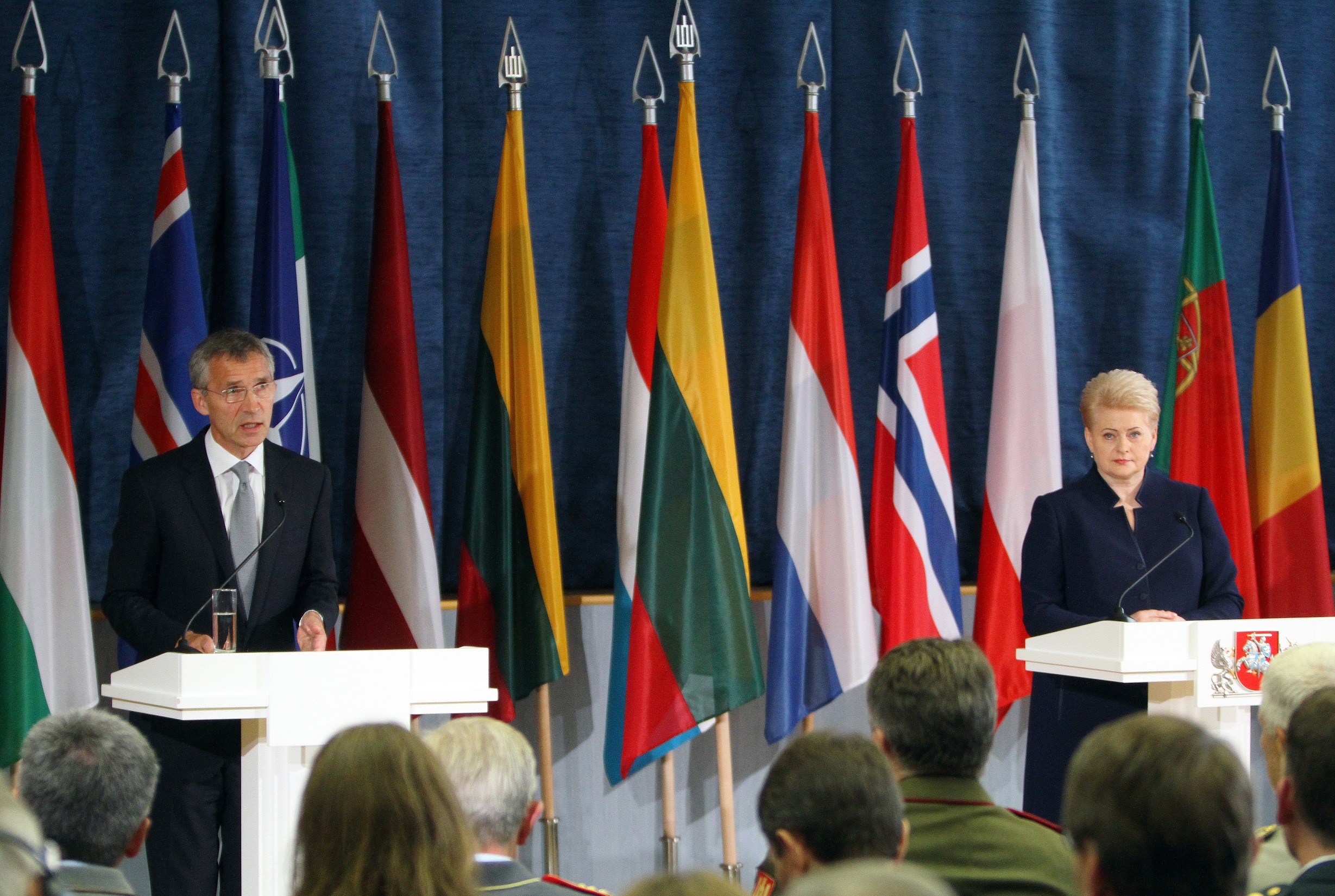
Attivati i comandi delle Unità della Forza di Integrazione della NATO

Lascia un commento Annulla risposta

Il tuo indirizzo email non sarà pubblicato. I campi obbligatori sono contrassegnati *

I agree to the Terms & Conditions and Privacy Policy.

Ultime News

Enigma Trump – Electomagazine 15.04.2026
Sala Stampa

Enigma Trump – Electomagazine 15.04.2026

by Andrea Marcigliano
15 Aprile 2026
0

Difficile capire Donald Trump. Difficile, quasi impossibile, decifrare i suoi comportamenti. Troppo alterni. Troppo imprevedibili. Tanto da aver spinto una...

Addio ad Orbàn – Electomagazine 14.04.2026

Addio ad Orbàn – Electomagazine 14.04.2026

14 Aprile 2026
Iran, Lanzalone-Somigli: “La chiusura di Hormuz come i Dardanelli nel 1915, Europa e Italia contribuiscano a missione USA”

Iran, Lanzalone-Somigli: “La chiusura di Hormuz come i Dardanelli nel 1915, Europa e Italia contribuiscano a missione USA”

14 Aprile 2026
La diplomazia nello Stretto – Electomagazine 13.04.2026

La diplomazia nello Stretto – Electomagazine 13.04.2026

13 Aprile 2026
L’incubo di Midterm – Electomagazine 12.04.2026

L’incubo di Midterm – Electomagazine 12.04.2026

12 Aprile 2026
C’era una volta – Electomagazine 11.04.2026

C’era una volta – Electomagazine 11.04.2026

11 Aprile 2026
Il Nodo di Gordio

Newsletter

LE PIU IMPORTANTI NOTIZIE DI GEOPOLITICA E GLI EVENTI MONDIALI

Iscriviti alla nostra mailing list e riceverai tutti gli aggiornamenti

ISCRIVITI ALLA NEWSLETTER

Categorie

Il Nodo di Gordio

  • Disclaimer
  • Abbonamento
  • Termini d’uso
  • Board
  • Abbonamento
  • Contattaci

Chi siamo

Il "Nodo di Gordio" è un think tank di geopolitica ed economia internazionale, promosso da una équipe di diplomatici, docenti universitari, giornalisti ed analisti in numerose discipline (geopolitica, storia, economia, finanza, politica estera, studi militari, letteratura, arte, marketing, comunicazione e gestione della rete internet)

© 2020 - Nodo di Gordio - Privacy Policy | Cookie Policy

No Result
View All Result
  • BREAKING NEWS
  • GLOBAL GORDIAN OUTLOOK
  • DIALOGHI MEDITERRANEI
  • EVENTI
  • SALA STAMPA
  • ABBONAMENTO
  • CHI SIAMO
    • THINK TANK
    • BOARD
    • ABBONAMENTO
  • PUBBLICAZIONI
    • RIVISTA
    • PAPER
    • MONOGRAFIE
  • NEWSLETTER
  • Italiano

© 2020 - Nodo di Gordio - Privacy Policy | Cookie Policy

This website uses cookies. By continuing to use this website you are giving consent to cookies being used. Visit our Privacy and Cookie Policy.