Interview by Daniele Lazzeri, chairman “Il Nodo di Gordio”
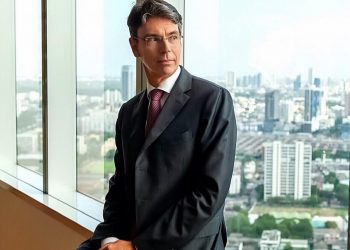
The complex situation over the entire middle-eastern checkerboard merits further explorations. Related to this, Think Tank “Il Nodo di Gordio” has interviewed eminent professor Marc Lynch, director of Study Centre for Middle-East at the George Washington University and author of an interesting book which title is “The Arab Uprising. The Unfinished Revolutions of the New Middle East” (PubblicAffairs, p. 288 USD 26.99); book that Lynch will unveiling next Monday, 25th of March in Venice, at the International Relation School Ca’ Foscari University.
We have asked him possible development of Arab springs and the role of new media in the middle-eastern context.

1. In your book, you assert that Saudi Arabia too will have its Tahrir Square. Will, therefore, the Arab Springs have a consecution?
The uprisings which we saw in early 2011 are only one manifestation of a deep structural change in the nature of Arab politics. Protests and popular dissent were rising across the region over the entire decade of the 2000s, and will continue to unfold over the coming decade. I do not believe that Saudi Arabia or the Gulf monarchies are immune to these problems. They have more financial resources and international support upon which to draw, but they still face deep challenges of a rising, wired generation which is dissatisfied with corruption, political repression, and an absence of opportunity.
2. Did the uprisings across the North Africa betray the expectations of a democratic future for the involved countries?
There is no guarantee that popular uprisings will produce democracy. They are driven by deep pressures for change, but those energies and grievances can lead to anarchy or new forms of populist authoritarianism as well. Many revolutionaries had economic demands, and the economy in Egypt and Tunisia has only deteriorated since 2011. Revolutionary movements also do not seem to be doing well at democratic participation, since they represent small minorities and often do not want to do the hard work of democratic organization.
3. Al Jazeera has progressively lost its driving role in information for the Sunni Arab world. On the Shi’a front, however, do the Al-Manar TV play a central role in the battles of Hezbollah?
Al-Jazeera has declined in part because it has become associated with Qatar’s foreign policy, and lost its status as an authentic voice of the Arab street. Al-Manar does have an important role for Hezbollah, but its role is increasingly limited only to Shi’a audiences as Arab politics becomes more sectarian and Syria has affected all political calculations.
4. What other countries could be subject of new revolutionary processes?
No country in the region is immune to these structural forces. Countries such as Egypt and Tunisia may see another round of uprisings, while thus far stable countries such as Jordan and Morocco may still experience a wave of contention. Even the Gulf states will face continuing challenges, especially in Bahrain and Kuwait.
5. What role are playing the social networks?
Social media is important for amplifying political trends, giving a voice to citizens, and facilitating political activism. During the Arab uprisings it contributed powerfully to unifying the Arab world around a narrative of popular struggle, but over the last year social media have contributed to spreading political fragmentation, sectarianism, and polarization between Islamists and their rivals.
6. The previous regimes in Iraq and Libya have fallen as a result of military operations. But, years later, those areas are still unstable. Are these, therefore, been a military and geopolitical failure?
I do not think Libya was a failure. It has struggled to build a new state out of the ruins of Qaddafi’s uninstitutionalized regime, but I believe that over the next few years it will come together and become a very successful state. Iraq, on the other hand, was a disastrous invasion by any standard. Iraq will likely remain unstable, violent, and semi-authoritarian for many years.
7. Will Syria and Iran have a common destiny? If Assad should fall, will Iran have numbered days?
Syria is likely to remain in turmoil for many years, even after Assad falls. This will harm Iran’s regional role, since Syria is its strongest Arab ally, but it will likely find ways to adapt and extend its influence even into a post-Assad Syria.
8. U.S.A and Israel are pressuring all over the Middle East. What will be the role of Europe?
I have not seen a strong role for Europe in the Arab spring, partly because of political divisions over Syria and partly because of its economic struggles. The greatest positive impact which Europe could have on the Arab transitions would be to find new ways to open its markets to goods and labor from North African countries and to promote investment. The idea of a Euro-Med partnership has never been more relevant than it is right now.