• it Italiano
  • Chi siamo
    • Think Tank
    • Board
  • Siti Amici
    • Afrofocus
    • Orsam
    • CNR
    • Revue Conflits
    • L’Opinione
    • Friedman Institute
    • IF Magazine
    • Festival Nazionale
    • Osce
    • Wikiamericas
    • Oltrepanto
    • European Parliament
sabato, Aprile 18, 2026
NEWSLETTER
Il Nodo di Gordio
  • BREAKING NEWS
  • GLOBAL GORDIAN OUTLOOK
  • DIALOGHI MEDITERRANEI
  • EVENTI
  • SALA STAMPA
  • PUBBLICAZIONI
    • RIVISTA
    • PAPER
    • MONOGRAFIE
No Result
View All Result
  • BREAKING NEWS
  • GLOBAL GORDIAN OUTLOOK
  • DIALOGHI MEDITERRANEI
  • EVENTI
  • SALA STAMPA
  • PUBBLICAZIONI
    • RIVISTA
    • PAPER
    • MONOGRAFIE
Il Nodo di Gordio
Home Historica

To the 550-anniversary of the Kazakh Khanate

by Ermanno Visintainer
25 Giugno 2015
0
SHARES
118
VIEWS
Condividi su FacebookCondividi su TwitterCondividi su Linkedin

The Epoch, which is known as the “Middle Ages”, covers the period between the ancient and modern history of people and nations. Historical science considers the Middle Ages as a bright and rich period, full of diverse events that promoted new forms of economic, social and political development of society. In this historical epoch, humanity has advanced considerably in the development of economic and spiritual culture in comparison with the previous periods of history.

Based on this periodization, the Kazakh tribes merged with the Turkic tribes, who had settled in the Semirechye [Seven Rivers] since the first centuries of our era, and especially, since the time of the Turkic Khanate in the VI-VII centuries, as well as merged with the Turkicized Mongol tribes of Moghulistan that formed the Kazakh identity.

The recently discovered new monuments and artefacts indicate that in the Middle Ages the Kazakh Khanate had equal diplomatic, economic and trade relations with neighbouring countries. The Khanate developed a written language and built cities where coins were minted.

The historical studies of the medieval Kazakh society imply the need to rely on a true story and the ability to determine a “living picture” of key events in the process of historical development that changed its course. In the study of the main stages of the history of the Kazakh society, one should systemize historical phenomena and should not try to tie them with the well-established traditional schemes. The determination of the main stages of the history of the Kazakh statehood, which is based on an actual historical process, is an objective matter. The statehoods of Abulkhair, Kerey and Dzhanibek and the Khanate of Kasym unconditionally serve as such a “living tissue” in the historical process. For the second half of the 16th century it includes the rule of Haqq Nazar Khan; the 16th and 17th centuries is a period when the vast territory came under the control of the Kazakh Khanate, and finally in XVIII-XIX centuries – Abylay Khan.

paesaggio kazakhstan

The history of the Kazakh statehood is inextricably linked with the history of the Turkic Khanate, the Golden Horde and state entities that emerged after its collapse. The study of the origin of the Kazakh khans’ dynasty and the ancestral relationships among them are based on a vast number of sources about its history, which provide genealogy of the descendants of Dzhuchi – the forerunner of the Kazakh khans. For example, in the second half of the 15th century, the Kazakh khans, Kerey and Dzhanibek brought together many Dzhuchids from dependent on them tribal groups and led them to Moghulistan.

The history of Kazakhstan of the XV-XVII centuries is characterized by the fact that the process of the Kazakh nation formation was completed by this period. The Kazakh people accepted their current self-designation and under this self-designation came into contact with neighbouring countries and confirmed their role in the history. Another peculiarity in the history of Kazakhstan is the fact that by this time the Kazakh state with a defined territory and certain ethnic composition has been formalized.


Valikhan Amirhanuly Turekhanov
Counsellor of the Embassy of the Republic of Kazakhstan to the Republic of Uzbekistan,
PhD student at the Institute of History of the Academy of Sciences of the Republic of Uzbekistan


Tags: kazakhstan
Ermanno Visintainer

Ermanno Visintainer

Laureato in “Lingue e Letterature Orientali” (turco) presso l’Università Ca’ Foscari di Venezia (Summa cum laude). È Professore onorario dell’Università “Kazakh Academy of Transport and Communications” di Almaty in Kazakhstan. Presidente del Centro Studi “Vox Populi” di Pergine Valsugana (Tn), autore di numerosi articoli inerenti alla turcologia e geopolitica apparsi su “Linea Quotidiano”, “Officina”, “Il Borghese” e su altre riviste. Per ASTREA ha pubblicato l’articolo: “L’Alessandro turco: alcune riflessioni in margine al Sedd-i İskenderî (La muraglia di Alessandro) di Alī Šīr Navā’ī, in “Quaderni di studi indo-mediterranei”, 2008. Ha partecipato alla stesura del volume “Imperi delle steppe – da Attila a Ungern Khan” con la pubblicazione “Continuità epica nelle letterature della Mongolia: dalle Epigrafi dell’Orkhon alla Storia Segreta dei Mongoli” (2008), “Porte d’Eurasia” con uno scritto dal titolo “Il modello islamico turco, l’Europa e il grande gioco delle fonti energetiche” (2009). Nel 2010 ha realizzato la monografia “Ahmed Yassawi: sciamano, sufi e letterato kazako”. Nel 2011 partecipa al volume: “La profondità strategica turca nel pensiero di Ahmet Davutoğlu” con il capitolo “Le premesse filosofiche della “Profondità Strategica” di Ahmet Davutoğlu”. E sempre nel 2011, assieme al prof. Andrea Marcigliano, pubblica “L’Aquila nel Sole, Leadership e carisma da Kültegin a Nursultan Nazarbayev”. Nel 2013 collabora alla stesura del volume “Da Baikonur alle stelle. Il Grande Gioco spaziale” e nel 2014 ai libri “Viandanti tra due mondi. Il Taccuino turco di Othmar Winkler” e “La Chiesa Apostolica Albana. Le radici di un simbolo dell’Azerbaigian”.

Articoli Correlati

Iran, Lanzalone-Somigli: “La chiusura di Hormuz come i Dardanelli nel 1915, Europa e Italia contribuiscano a missione USA”
In evidenza

Iran, Lanzalone-Somigli: “La chiusura di Hormuz come i Dardanelli nel 1915, Europa e Italia contribuiscano a missione USA”

14 Aprile 2026
Intervista a Daniele Lazzeri – Next Economy 02.03.2026
Breaking News

Intervista a Daniele Lazzeri – Next Economy 02.03.2026

2 Marzo 2026
Ciao Guargua!
Breaking News

Ciao Guargua!

5 Gennaio 2026
Imperialismo americano nuovamente in Sudamerica
Breaking News

Imperialismo americano nuovamente in Sudamerica

3 Gennaio 2026
L’Ambasciatore Marsili: “bene il governo sugli asset russi”. E sulla UE: “da Trump una sveglia positiva” – Insideover 17.12.2025
In evidenza

L’Ambasciatore Marsili: “bene il governo sugli asset russi”. E sulla UE: “da Trump una sveglia positiva” – Insideover 17.12.2025

17 Dicembre 2025
MORTA UN’EUROPA SE NE FA UN’ALTRA
Breaking News

MORTA UN’EUROPA SE NE FA UN’ALTRA

16 Ottobre 2025
Next Post
paper10_fitna

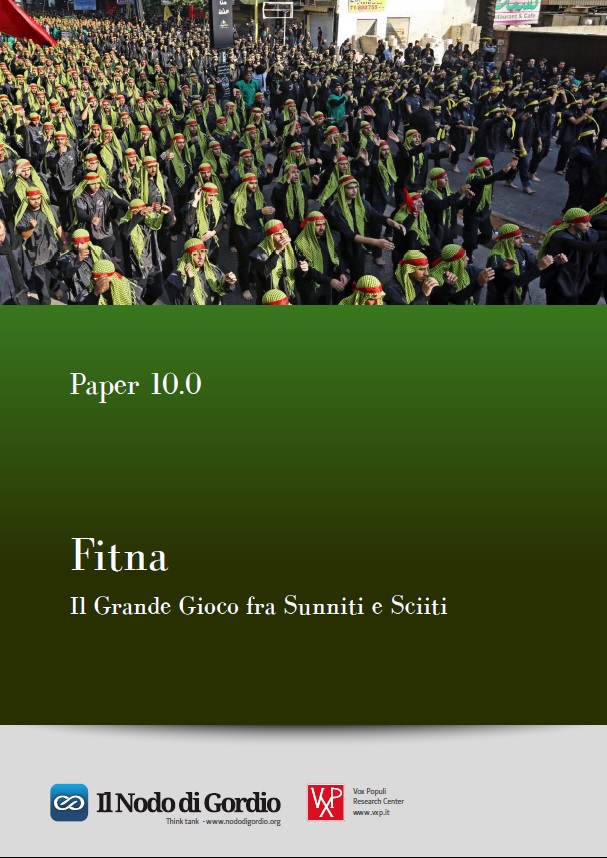
[Paper 10.0] Fitna! Il Grande Gioco tra Sunniti e Sciiti

Lascia un commento Annulla risposta

Il tuo indirizzo email non sarà pubblicato. I campi obbligatori sono contrassegnati *

I agree to the Terms & Conditions and Privacy Policy.

Ultime News

Il sonno europeo – Electomagazine 18.04.2026
Sala Stampa

Il sonno europeo – Electomagazine 18.04.2026

by Andrea Marcigliano
18 Aprile 2026
0

Dunque…. Martedì scorso, Sergei Lavrov, il ministro degli esteri russo, è volato a Pechino. Per incontrare il suo omologo cinese....

Il vecchio e il nuovo – Electomagazine 17.04.2026

Il vecchio e il nuovo – Electomagazine 17.04.2026

17 Aprile 2026
Il fronte interno – Electomagazine 16.04.2026

Il fronte interno – Electomagazine 16.04.2026

16 Aprile 2026
Enigma Trump – Electomagazine 15.04.2026

Enigma Trump – Electomagazine 15.04.2026

15 Aprile 2026
Addio ad Orbàn – Electomagazine 14.04.2026

Addio ad Orbàn – Electomagazine 14.04.2026

14 Aprile 2026
Iran, Lanzalone-Somigli: “La chiusura di Hormuz come i Dardanelli nel 1915, Europa e Italia contribuiscano a missione USA”

Iran, Lanzalone-Somigli: “La chiusura di Hormuz come i Dardanelli nel 1915, Europa e Italia contribuiscano a missione USA”

14 Aprile 2026
Il Nodo di Gordio

Newsletter

LE PIU IMPORTANTI NOTIZIE DI GEOPOLITICA E GLI EVENTI MONDIALI

Iscriviti alla nostra mailing list e riceverai tutti gli aggiornamenti

ISCRIVITI ALLA NEWSLETTER

Categorie

Il Nodo di Gordio

  • Disclaimer
  • Abbonamento
  • Termini d’uso
  • Board
  • Abbonamento
  • Contattaci

Chi siamo

Il "Nodo di Gordio" è un think tank di geopolitica ed economia internazionale, promosso da una équipe di diplomatici, docenti universitari, giornalisti ed analisti in numerose discipline (geopolitica, storia, economia, finanza, politica estera, studi militari, letteratura, arte, marketing, comunicazione e gestione della rete internet)

© 2020 - Nodo di Gordio - Privacy Policy | Cookie Policy

No Result
View All Result
  • BREAKING NEWS
  • GLOBAL GORDIAN OUTLOOK
  • DIALOGHI MEDITERRANEI
  • EVENTI
  • SALA STAMPA
  • ABBONAMENTO
  • CHI SIAMO
    • THINK TANK
    • BOARD
    • ABBONAMENTO
  • PUBBLICAZIONI
    • RIVISTA
    • PAPER
    • MONOGRAFIE
  • NEWSLETTER
  • Italiano

© 2020 - Nodo di Gordio - Privacy Policy | Cookie Policy

This website uses cookies. By continuing to use this website you are giving consent to cookies being used. Visit our Privacy and Cookie Policy.