• it Italiano
  • Chi siamo
    • Think Tank
    • Board
  • Siti Amici
    • Afrofocus
    • Orsam
    • CNR
    • Revue Conflits
    • L’Opinione
    • Friedman Institute
    • IF Magazine
    • Festival Nazionale
    • Osce
    • Wikiamericas
    • Oltrepanto
    • European Parliament
mercoledì, Maggio 6, 2026
NEWSLETTER
Il Nodo di Gordio
  • BREAKING NEWS
  • GLOBAL GORDIAN OUTLOOK
  • DIALOGHI MEDITERRANEI
  • EVENTI
  • SALA STAMPA
  • PUBBLICAZIONI
    • RIVISTA
    • PAPER
    • MONOGRAFIE
No Result
View All Result
  • BREAKING NEWS
  • GLOBAL GORDIAN OUTLOOK
  • DIALOGHI MEDITERRANEI
  • EVENTI
  • SALA STAMPA
  • PUBBLICAZIONI
    • RIVISTA
    • PAPER
    • MONOGRAFIE
Il Nodo di Gordio
Home In evidenza

Opinion: What Italy’s new government means to the country and EU – China Global Television Network 02.06.2018

by Daniele Lazzeri
2 Giugno 2018
0
SHARES
93
VIEWS
Condividi su FacebookCondividi su TwitterCondividi su Linkedin

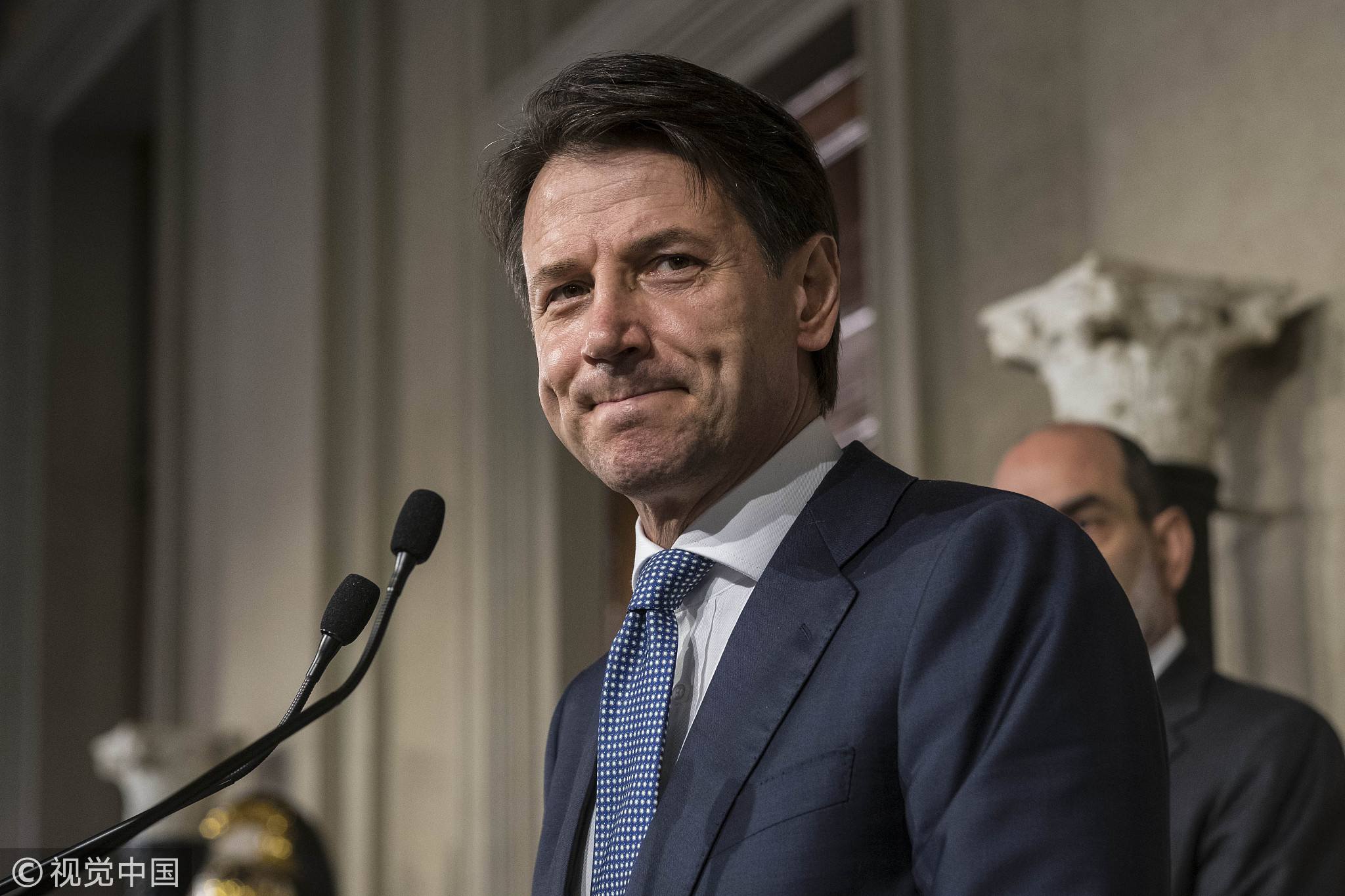
Prime Minister designate Giuseppe Conte addresses the media after a meeting with Italian President Sergio Mattarella at the Quirinal Palace in Rome, May 23, 2018./VCG Photo

After three months of political deadlock, Italy finally has a government. It has been one of the longest crises in the history of the republic, caused not only by the cumbersome mechanisms of the new electoral law – a crossbreed between the proportional and the majority systems – but also by the president’s hesitations, which have prolonged the consultations and vetoed the name of Professor Paolo Savona as minister of economy – one of the most illustrious Italian economists and who has held a ministerial position in the government of Carlo Azeglio Ciampi who brought Italy into the euro area.

President Sergio Mattarella’s choice has been influenced by Savona’s critical approach to the austerity policies imposed on the European Union by Berlin.

The procrastination to choose between the formation of a government and the early elections aimed at imposing on Italy another “technocratic government” led by Sergio Cottarelli, an illustrious exponent of the International Monetary Fund, that would have set up as a veiled commissioner of Italian politics.

The attempt failed because the willingness to vote for a government led by Cottarelli was granted only by a handful of parliamentarians linked to the former European Commissioner Emma Bonino, and with the vocal opposition of all the other Italian political forces.

At this point, President Mattarella had to summon again Professor Giuseppe Conte, previously nominated as Prime Minister by the League leader Matteo Salvini, and the 5-Star Movement, and approve a government in which Paolo Savona was moved from the Ministry of Economy to the Ministry of European Policies while his close friend Professor Giovanni Tria was chosen to head the Ministry of Economy and Finance.The choice implies that the government is already determined to battle it out in all the EU bodies not so much to obtain a revision of the European treaties or an improbable exit from the euro single currency, but rather to bring the application of the European treaties to their original meaning, misrepresented and badly applied due to the austerity policies and budget constraints imposed by German Chancellor Angela Merkel.

Moreover, this government represents an absolute innovation in many fields, and promises to give radical turns to the “Italian System”: From the policy towards the migrants continuously arriving from the other side of the Mediterranean, to the fiscal one with the gradual application of the “Flat Tax,” without forgetting a new social policy through the “Citizenship Income” aimed at supporting the unemployed and the many young people still looking for their first job.

In foreign policy, the government of Giuseppe Conte will maintain strong relations with NATO, given the existing relationship with the policies of the US President Donald Trump, but, presumably, it will try to undertake its own autonomous policies in the Mediterranean and towards North Africa, from where migrants are coming to Europe. Furthermore, a reopening of the dialogue with Moscow seems predictable, in consideration of the position repeatedly supported by the League and the 5-Star Movement for a loosening of the trade sanctions against Russia.

Unlike the unsuccessful hypothesis of “political engineering”, put forward by President Mattarella, the government will be able to enjoy a solid majority and a broad popular appreciation, which indicates a clear turnaround and a wind of innovation compared to the experiences of the past. In fact, the traditional Italian parties, from “Forza Italia” of Silvio Berlusconi to the “Democratic Party” of the former Prime Minister Matteo Renzi, are in a moment of deep crisis for not being able to interpret the epochal changes in politics both in Italy and throughout the European Union.

Editor’s note: Daniele Lazzeri is the chairman of think tank “Il Nodo di Gordio”. The article reflects the author’s opinion, and not necessarily the views of CGTN.

Tags: Daniele LazzeriFormation of GovernmentItalyOpinion
Daniele Lazzeri

Daniele Lazzeri

Articoli Correlati

La crisi tedesca – Electomagazine 06.05.2026
Sala Stampa

La crisi tedesca – Electomagazine 06.05.2026

6 Maggio 2026
La pazienza cinese – Electomagazine 05.05.2026
Sala Stampa

La pazienza cinese – Electomagazine 05.05.2026

5 Maggio 2026
La guerra del petrolio – Electomagazine 04.05.2026
Sala Stampa

La guerra del petrolio – Electomagazine 04.05.2026

4 Maggio 2026
Le acque insicure – Electomagazine 03.05.2026
Sala Stampa

Le acque insicure – Electomagazine 03.05.2026

3 Maggio 2026
La preoccupazione di Erdogan – Electomagazine 02.05.2026
Sala Stampa

La preoccupazione di Erdogan – Electomagazine 02.05.2026

2 Maggio 2026
Il gatto Putin – Electomagazine 01.05.2026
Sala Stampa

Il gatto Putin – Electomagazine 01.05.2026

1 Maggio 2026
Next Post
A Barletta focus sui mercati esteri e le opportunità con l’Albania

A Barletta focus sui mercati esteri e le opportunità con l’Albania

Lascia un commento Annulla risposta

Il tuo indirizzo email non sarà pubblicato. I campi obbligatori sono contrassegnati *

I agree to the Terms & Conditions and Privacy Policy.

Ultime News

La crisi tedesca – Electomagazine 06.05.2026
Sala Stampa

La crisi tedesca – Electomagazine 06.05.2026

by Andrea Marcigliano
6 Maggio 2026
0

Mosca ha deciso. Dopo una rapida trattativa con Astana, l’oleodotto che portava petrolio kazako in Germania è stato chiuso. Il...

La pazienza cinese – Electomagazine 05.05.2026

La pazienza cinese – Electomagazine 05.05.2026

5 Maggio 2026
La guerra del petrolio – Electomagazine 04.05.2026

La guerra del petrolio – Electomagazine 04.05.2026

4 Maggio 2026
Le acque insicure – Electomagazine 03.05.2026

Le acque insicure – Electomagazine 03.05.2026

3 Maggio 2026
La preoccupazione di Erdogan – Electomagazine 02.05.2026

La preoccupazione di Erdogan – Electomagazine 02.05.2026

2 Maggio 2026
Il gatto Putin – Electomagazine 01.05.2026

Il gatto Putin – Electomagazine 01.05.2026

1 Maggio 2026
Il Nodo di Gordio

Newsletter

LE PIU IMPORTANTI NOTIZIE DI GEOPOLITICA E GLI EVENTI MONDIALI

Iscriviti alla nostra mailing list e riceverai tutti gli aggiornamenti

ISCRIVITI ALLA NEWSLETTER

Categorie

Il Nodo di Gordio

  • Disclaimer
  • Abbonamento
  • Termini d’uso
  • Board
  • Abbonamento
  • Contattaci

Chi siamo

Il "Nodo di Gordio" è un think tank di geopolitica ed economia internazionale, promosso da una équipe di diplomatici, docenti universitari, giornalisti ed analisti in numerose discipline (geopolitica, storia, economia, finanza, politica estera, studi militari, letteratura, arte, marketing, comunicazione e gestione della rete internet)

© 2020 - Nodo di Gordio - Privacy Policy | Cookie Policy

No Result
View All Result
  • BREAKING NEWS
  • GLOBAL GORDIAN OUTLOOK
  • DIALOGHI MEDITERRANEI
  • EVENTI
  • SALA STAMPA
  • ABBONAMENTO
  • CHI SIAMO
    • THINK TANK
    • BOARD
    • ABBONAMENTO
  • PUBBLICAZIONI
    • RIVISTA
    • PAPER
    • MONOGRAFIE
  • NEWSLETTER
  • Italiano

© 2020 - Nodo di Gordio - Privacy Policy | Cookie Policy

This website uses cookies. By continuing to use this website you are giving consent to cookies being used. Visit our Privacy and Cookie Policy.